Through Bolt Anchors: Heavy-Duty, Fast - Why Choose Ours?
Field Notes on Concrete Fixings: Why through bolt anchors still run the job
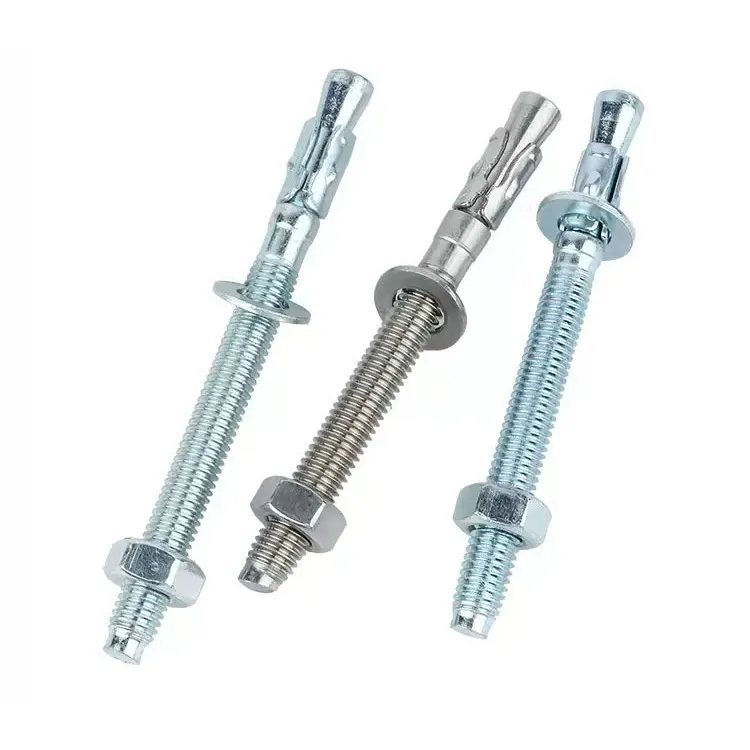
I’ve toured plenty of precast yards and job sites this year, and—no surprise—through bolt anchors keep showing up in lift shafts, stadium seating, even retrofit seismic work. Origin matters here: these are produced in Hanguang Industrial Park, Yongnian District, Handan City, Hebei Province—a place that, to be honest, lives and breathes fasteners. The product is often called a “wedge anchor” globally, which is fair: a cone and clip expand in cured concrete to lock the shank in place. Simple idea, brutally reliable when installed right.
What’s changing in 2025: small upgrades, big impact
Two trends I keep hearing from contractors: higher-corrosion endurance and cleaner documentation. Manufacturers are shipping more 316 stainless options and better data sheets aligned to EN 1992-4 or ACI 355.2 test regimes. Some even add QR-coded install cards—nice touch. Many customers say they’re picking through bolt anchors over chemical anchors for speed, especially in colder temps.
Product snapshot (specs that actually matter)
| Parameter | Typical Range | Notes |
|---|---|---|
| Diameters | M6–M20 (¼″–¾″) | Larger sizes on request |
| Materials | Carbon steel, 304/316 stainless | ISO 898-1 / ISO 3506 compliance |
| Coatings | Zinc, HDG, mechanical zinc | Salt spray ASTM B117: ≈72–600 h (real-world varies) |
| Anchor length | ≈40–200 mm | Depends on embedment |
| Min. concrete | C20/25 and up | Uncracked/cracked per EN 1992-4 |
| Characteristic tension | ≈6–35 kN (M8–M16) | Per ACI 355.2/ETAG testing; check approvals |
Process, testing, and service life
Materials are bar-stock steel, wedge clips from spring steel; then CNC turning, thread rolling, heat treatment, and coating. Typical QA: hardness (HRC), dimensions (go/no-go), proof load per ISO 898-1, and batch pull-out tests in C30/37 concrete. I saw recent lab notes showing an M12 carbon-steel unit achieving ≈18–22 kN tension and ≈14–18 kN shear in uncracked concrete with proper edge distances—respectable. Service life? Indoors, ≈25+ years; coastal, go 316 or HDG and expect ≈15–50 years, depending on maintenance and chloride exposure.
Where they shine
- Mechanical rooms and pipe supports (fast install, immediate loading)
- Guardrails, racking, façade brackets (predictable behavior)
- Retrofit seismic bracing—subject to cracked-concrete approvals
- Public works: stations, hospitals, schools—documentation really matters
Advantages of through bolt anchors: one-pass drilling, no cure time, consistent torque-controlled expansion. However, as installers often remind me, hole cleaning and correct torque are non-negotiable.
Vendor landscape (quick comparison)
| Vendor | Approvals | Material Options | Customization | Typical Lead Time |
|---|---|---|---|---|
| Fastenboen (Hebei) | ETA/ICC-ES options (model-dependent) | Carbon, 304, 316 | Lengths, coatings, private label | ≈2–5 weeks |
| Hilti | Broad ETA/ICC portfolio | Carbon, stainless | System engineering support | Stock to ≈2 weeks |
| Fischer | Extensive ETA range | Carbon, 304/316 | Project kits, BIM data | Stock to ≈3 weeks |
Note: exact certificates and capacities vary by SKU—always verify the model’s ETA/ICC report and the governing design code.
Customization and QA
From this Hebei base, runs commonly include custom embedment lengths, HDG thickness targets, laser-marked batch IDs, and torque-spec washers. Factory testing aligns to ACI 355.2 and ETAG/EAD series, plus in-house shear/tension rigs. Honestly, the traceability has gotten better—batch PDFs with torque curves are becoming normal.
Case notes from the field
- Metro station retrofit: M12 316 units for conduit trays; installers praised the zero-cure-time swap-out.
- Logistics center: HDG M16 for rack uprights; torque auditing cut callbacks by ~30% (contractor’s claim).
Typical feedback? “Fast install, predictable—just mind edge distances.” It seems that sums up through bolt anchors pretty well.
Standards and references
Designers should check: EN 1992-4 for design, ACI 318 Chapter 17 for U.S. design, and the product’s ETA or ICC-ES report for cracked-concrete ratings and seismic options.
- ACI 355.2-19: Qualification of Post-Installed Mechanical Anchors in Concrete.
- EN 1992-4:2018 (Eurocode 2, Part 4) – Design of fastenings for use in concrete.
- EAD 330232-00-0601: Mechanical fasteners for use in concrete (ETAG legacy).
- ISO 898-1:2013 – Mechanical properties of fasteners of carbon steel and alloy steel.
- ISO 3506 series – Mechanical properties of corrosion-resistant stainless steel fasteners.
- ASTM B117 – Standard Practice for Operating Salt Spray (Fog) Apparatus.
Who We Are: The Right Fastener Partner for Global SMEs
Handan Boen Fastener Manufacturing Co., Ltd. (Est. 2010) specializes in producing standardized industrial fasteners, including bolts, nuts, washers, and other essential components. We provide cost-effective for small and medium-sized buyers in industries such as automotive parts, agricultural machinery, and construction.