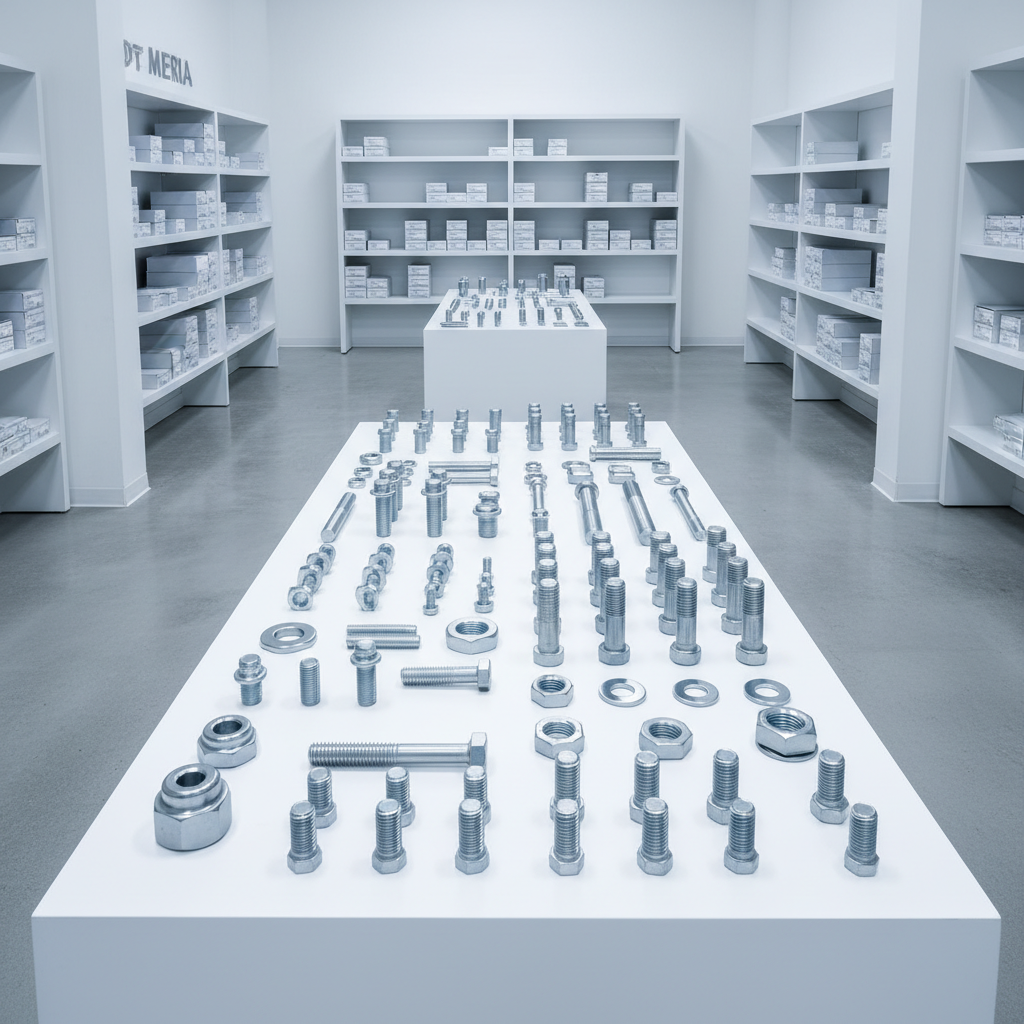
The precision of high-load connection systems increasingly depends on the ability to maintain constant clamp loads despite thermal expansion or vibration. In the specialized landscape of industrial fasteners, the role of disc spring washer manufacturers has evolved from producing simple components to engineering critical load-compensation solutions.
For engineering teams in automotive and heavy machinery, the challenge is not just finding a spring element, but ensuring the material fatigue limits and spring rates are precisely matched to the assembly's operating environment. Inconsistent spring characteristics can lead to joint loosening, resulting in costly unscheduled downtime and potential structural failure in high-pressure systems.
This technical analysis explores the selection criteria for high-performance spring washers, the impact of material grades on long-term reliability, and how integrating these components with high-strength bolting solutions can optimize industrial joint integrity.

Load Compensation Mechanics in Industrial Joints

Unlike standard flat washers that only distribute the load, disc springs function as heavy-duty springs that can be compressed to store energy. When integrated into a bolted joint, they maintain a minimum preload even when the connected parts undergo thermal contraction or axial shifting.
This mechanism is vital for preventing the "gap" formation that typically occurs in rigid connections. By providing a continuous counter-force, the system ensures that the bolt remains in tension, which is the primary requirement for preventing joint separation under cyclic loading.
Material Engineering and Spring Rate Factors
The performance of a spring washer is dictated by its material's elastic limit and the geometric profile of the disc. High-carbon steel and stainless steel are the primary choices, where the former offers superior load capacity and the latter provides the necessary corrosion resistance for chemical or outdoor environments.
The "Spring Rate" (k) is a critical parameter that defines the force required to compress the washer by a specific distance. For engineers, selecting a rate that is too high can lead to premature bolt yielding, while a rate that is too low may fail to compensate for the actual displacement of the joint.
Surface treatments, such as HDG (Hot-Dip Galvanized) or Teflon coatings, are not merely for aesthetics. They significantly influence the friction coefficient between the washer and the flange, which in turn affects the actual torque-to-tension conversion during installation.
Critical Failure Modes in Heavy-Duty Washers
The most common failure in spring washers is "permanent set" or plastic deformation. This occurs when the washer is compressed beyond its elastic limit, meaning it no longer returns to its original height and ceases to provide the required compensating force.
Additionally, "flattening" can occur due to improper seating. If the mating surface is not flat or if the washer is not perfectly perpendicular to the bolt axis, the load is distributed unevenly, creating stress concentrations that cause the disc to crack or warp.
Comparative Performance Assessment
Evaluating the effectiveness of different washer configurations requires a look at normalized engineering scores. We assess factors such as fatigue resistance, load stability, and installation ease across different common industrial profiles.
The following data represents a relative assessment of how different configurations perform under typical industrial stress cycles, where a higher value indicates a better performance rating for that specific metric.
Normalized Engineering Assessment for Spring Configurations
Deployment Scenarios in Machinery Frames
In agricultural machinery frames, where equipment is subjected to constant shock loads and vibration, the integration of conical and disc spring washers is critical. A typical deployment scenario involves these washers placed under the head of flange bolts to ensure that vibration does not lead to bolt loosening, which could otherwise result in catastrophic structural failure.
For industrial systems utilizing disc spring washer manufacturers' components, the focus is often on the interaction between the washer and the bolt grade. For example, pairing B7 high-strength bolts with precision washers ensures that the joint can withstand extreme tensile stresses without compromising the preload.
Evolution of Spring Fastening Technology
The industry is moving toward "intelligent fastening," where the focus is on the synergy between material science and automated installation. Future developments are likely to prioritize alloys with higher fatigue limits and specialized coatings that reduce installation friction to near-zero.
There is also a growing trend toward hybrid fastening systems, where disc springs are combined with locking nuts to create a redundant safety layer. This approach is becoming standard in the aerospace and high-end automotive sectors to eliminate the risk of human error during manual torque application.
Moreover, the transition toward sustainable manufacturing is pushing producers to optimize the raw material usage of these components, reducing waste without sacrificing the tensile strength or the elastic properties required by global ISO standards.
Selection Framework for Procurement Teams
Procurement managers must evaluate spring washers not on price alone, but on the "Total Cost of Ownership." A cheaper washer that allows for 10% more bolt loosening over a year can cost a factory thousands in unplanned maintenance.
The selection process should begin with the operating environment: temperature, chemical exposure, and vibration frequency. Once these parameters are defined, the required spring rate and material grade can be mapped to the specific needs of the assembly.
The following matrix provides a guidance framework for selecting the appropriate configuration based on the industrial application profile.
| Configuration Profile | Material Choice | Primary Requirement | Recommended Use Case |
|---|---|---|---|
| Basic Profile | Carbon Steel | General Preload | Low-vibration brackets |
| Standard Duty | Galvanized Steel | Corrosion Control | Agricultural frames |
| High-Load Profile | Alloy Steel (B7) | Maximum Force | Pressure vessel flanges |
| Precision Profile | Stainless 304/316 | Chemical Stability | Food/Pharma equipment |
| Extreme Temp Profile | Special Alloy | Thermal Stability | Heat exchangers |
| Industry Baseline | ISO Standard Steel | General Compliance | Standard machinery |
Technical FAQ
The spring rate should be calculated based on the expected axial displacement of the joint. You must determine the maximum thermal expansion or vibration amplitude and select a washer that can provide a counter-force equal to or greater than the potential loss in preload. Consulting technical catalogs from established disc spring washer manufacturers is recommended to match the k-value with your specific bolt tension.
Yes. Stacking in series (one on top of another) maintains the same spring rate but increases the total deflection distance. Stacking in parallel (nested inside each other) multiplies the spring rate by the number of washers while maintaining the same deflection. This flexibility allows engineers to customize the load profile without needing a completely new part design.
Coatings primarily affect the friction coefficient. For example, Teflon or Zinc coatings reduce friction, allowing for more accurate torque-to-tension conversion. However, overly thick coatings can occasionally interfere with the seating of the washer. It is essential to verify that the coating thickness is accounted for in the final assembly tolerances.
To avoid permanent set, ensure that the washer is never compressed beyond its elastic limit. This is achieved by using calibrated torque wrenches and verifying the compression ratio against the manufacturer's specifications. If the joint requires high deflection, using a series stack is a safer engineering choice than over-compressing a single disc.
While the terms are often used interchangeably, conical washers generally refer to the broader category of spring-loaded washers, whereas disc springs (Belleville washers) are specifically engineered for high loads in very small spaces. Disc springs provide a more linear load-deflection curve and are capable of handling significantly higher forces per unit of volume.
Spring washers should be stored in a dry, temperature-controlled environment to prevent oxidation, especially for carbon steel grades. They should be kept in their original packaging to avoid physical damage to the edges of the discs, as any nicks or scratches can become initiation points for fatigue cracks once the washer is placed under load.
Engineering Summary and Practical Implication
The transition from rigid to compensating joints is a necessity for any industrial system operating under cyclic loads or thermal stress. By understanding the relationship between material grade, spring rate, and the resulting clamp load stability, engineers can significantly reduce the risk of joint failure.
Ultimately, the value of sourcing from precision disc spring washer manufacturers lies in the consistency of the elastic properties. For companies looking to optimize their supply chain, focusing on full material traceability and ISO-certified quality control is the most effective way to ensure long-term structural reliability.